
On building an almost-daily practice
Making computational art with creative coding 🌱

Hola,
I thought many of you following my newsletter might find it useful to learn how I built my current practice of writing shaders almost on a daily basis.
This is a long post, thus I made a table of contents:
Artist background
Inspiration
#anydayshaders An almost-daily practice
The beginning (2020)
Getting familiar (2021)
Developing a style (2022)
Refining a style (2023)
Steady practice (2024)
Effortless practice (2025)
Current practice (2026)
Tips on an almost-daily practice
Online workshop on building a practice
If you want to skip to my tips or workshop info, scroll all the way to the bottom.
Artist background
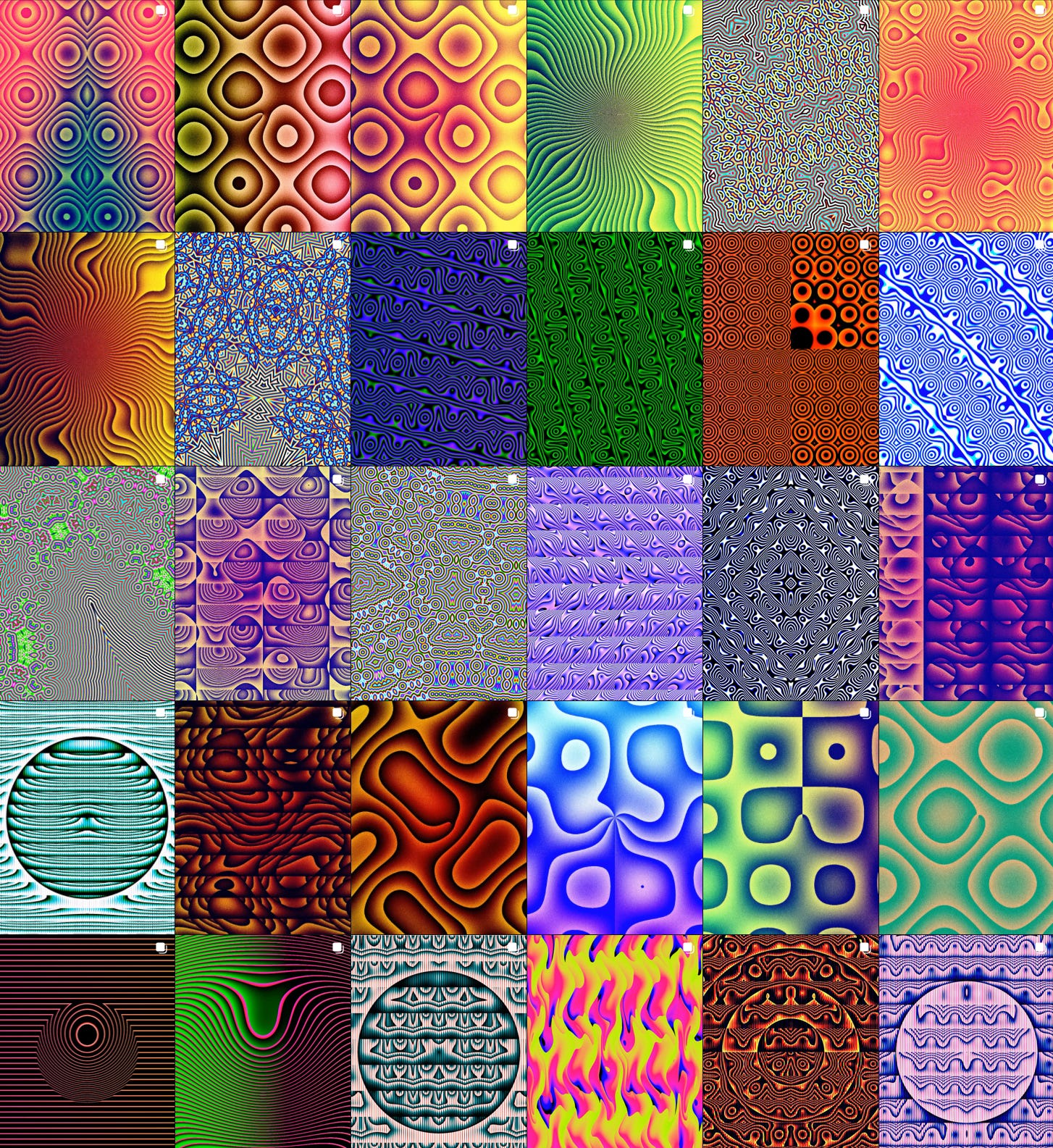
For anybody new in here, welcome! I’m a multidisciplinary artist working primarily with shaders. I collaborate with other artists, musicians, curators, brands, studios, and independent designers around the world to create mesmerizing visual experiences for fine arts (museums and galleries), the web, festivals, music releases (singles, eps, albums), and live shows.
I’m a self-taught programmer creating computational artwork with code. I teach often on the subject, as I have a course on fundamentals, this sporadic newsletter, in addition to offer workshops and seminars independently focusing on shaders, creative coding, and generative art.
Inspiration
When I first started to learn creative coding in 2019, before I even selected my favorite way to create art with code, I started following artists making computational art or generative art in social media.
While I went into a rabbit hole and discovered so much inspiration, a few artist that were posting daily or frequently got my attention: Matt DesLauriers, Saskia Freeke, Sean Zellmer, Dave Whyte and Zach Lieberman.
I found it fascinating that they were generating so much beautiful content that often. At the time, I wondered how they could even manage to do such task, as me creating something even decent (in my opinion) would take me weeks, if not months. I couldn’t conceive how that would be possible.
Maybe worth mentioning too that what lead me to learn creative coding back then was that I was looking for a therapeutic activity to support my mental health. Something that I would enjoy so much doing, it would relax me and allow me to forget the complications of life for some time. Once I realized I could apply three things I loved: art, design and programming, I was hooked.
#anydayshaders An almost-daily practice
In 2020, I decided to chase the pot of gold at the end of the rainbow. I was determined to become an artist, and not only have a hobby of creative coding. In order to do this I had to become good at whatever I’d choose to do. The goals at the time: one day make physical installations and projections with abstract motion visual art, work with museums or galleries, and do visuals for musicians.
I heard from many artists I had been watching closely for about a year, that building a practice of creating constantly helped them do the kind of the art they were doing those days, and also find the type of work they wanted. In addition, to my experience in other fields and life, practice makes perfect (nothing is perfect, but can be really good).
I sat one day in my computer with the decision of learning shaders as my way to create art with code, and while I found it very intimidating and hard, I told myself that in order to not be overwhelmed and get off track of my artistic goal, I’d make a creative coding practice of whenever I’d feel like doing it. Not daily, not weekly, not even monthly, basically no time barrier (in my mind), thus I’d not feel pressured to create, but still I had to try creating again after a creation, and so I called my practice #anydayshaders.
I also wouldn’t tied myself up to a schedule. I will create during any time of the day I’d have time and feel inspire or want to learn shaders. It could be mornings, afternoons or evenings.
I had to let go of my perfectionism and force myself to post a shader exploration after spending maximum a few days on it, not even a week. Sort of pomodoro myself. Even if by then it felt not great in terms of creation, share it as a way to ground me into limiting myself in drawing with code as with rough sketches with pencil and paper on a sketchbook. Maybe one day one of such sketches could be improved, but for the practice of learning shaders and building an artistic practice, I would try to simply spend only a certain amount of time until I achieve the understanding of a certain algorithm or land something interesting visually, even if not fully finished. Make it a habit.
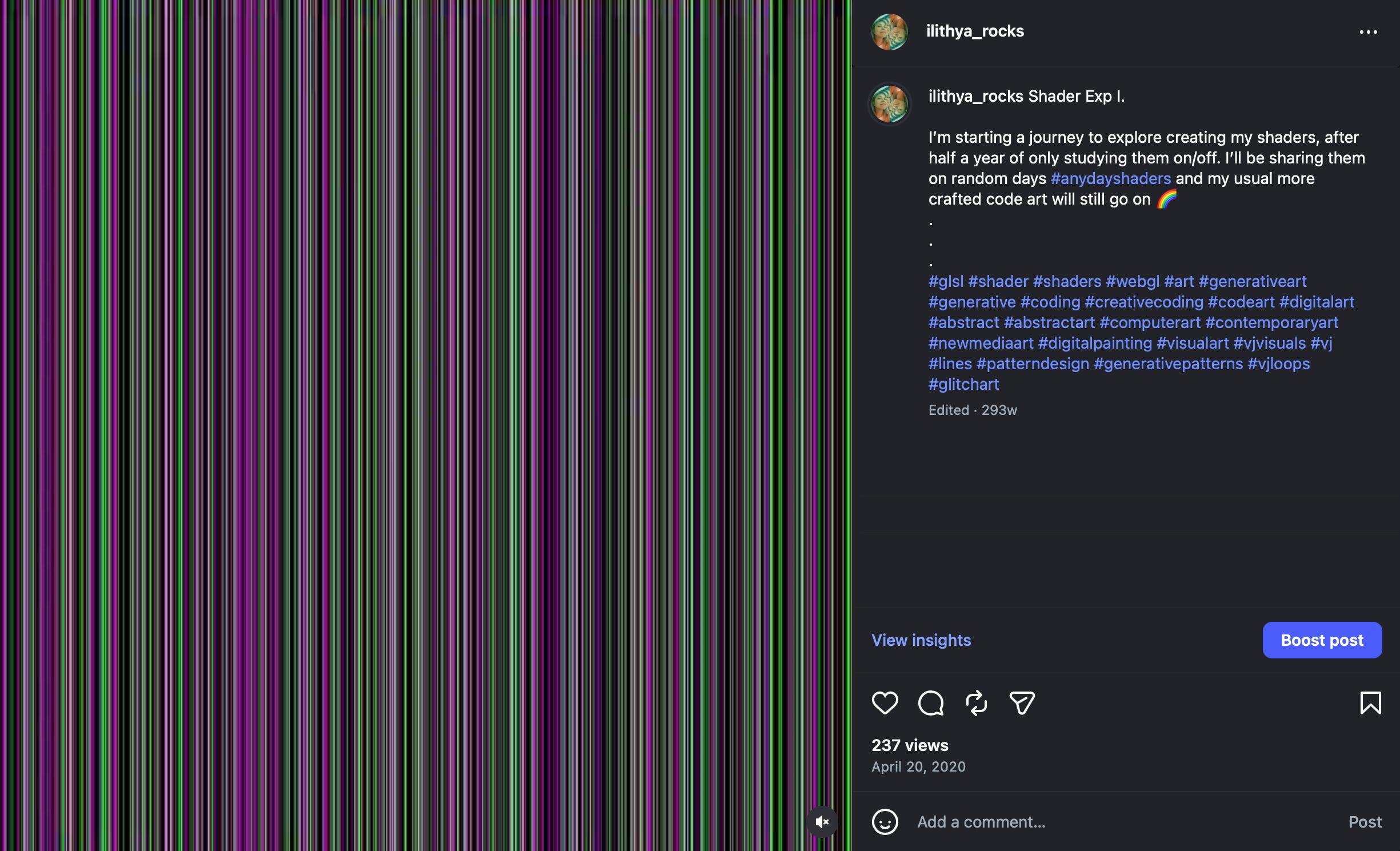
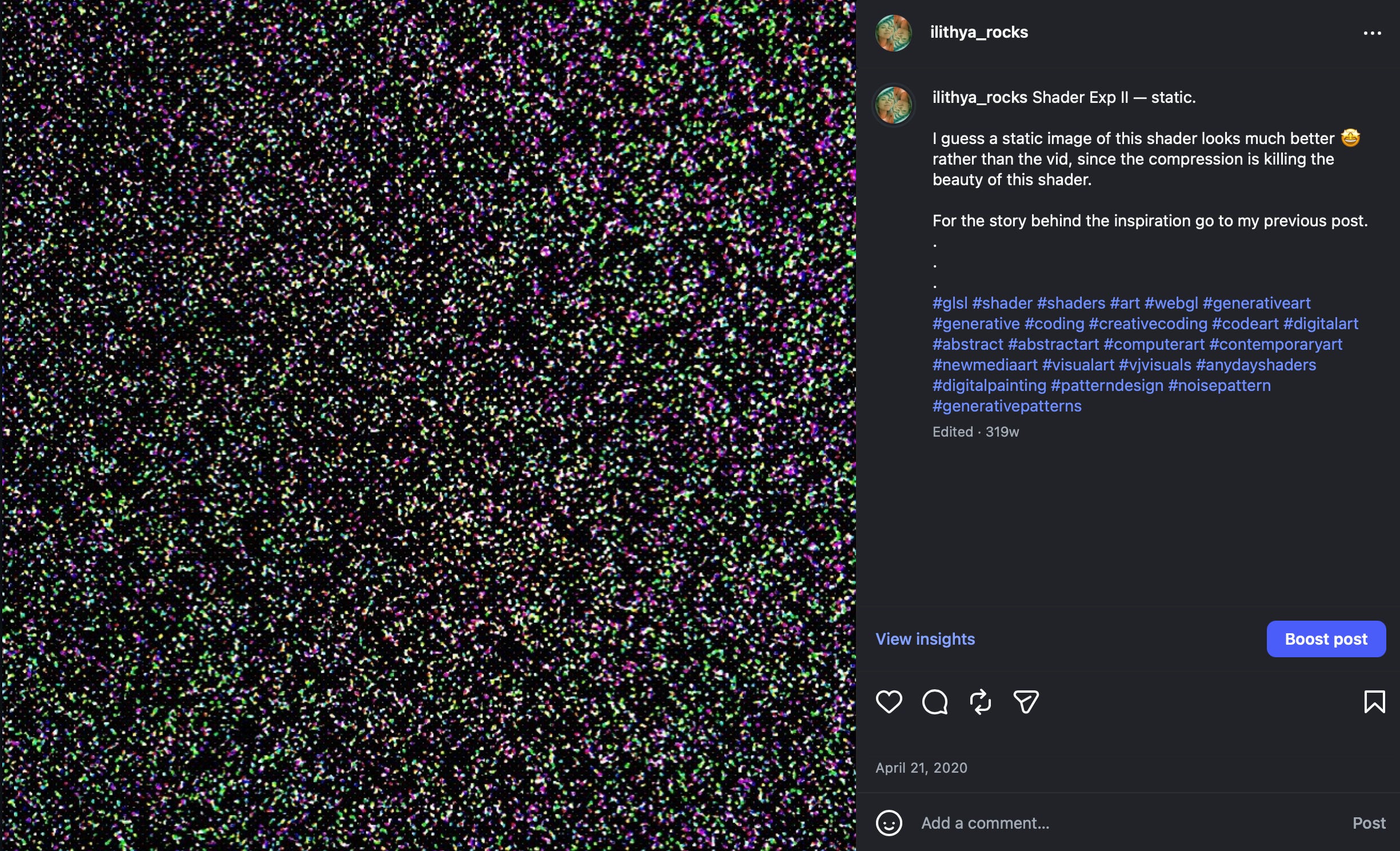
When I started creating my first shaders, I thought to share it with the world as many other artists who as I mentioned inspired me, and because I thought it’d make a great visual diary of how my practice develops, to also be able to reflect on how my shader skills and techniques would grow, along my artistic visual craft progress.
The beginning
The first year of my practice I created 100 shaders. Some of them daily, some of them after many days, and some weekly. The time of the day varied, but I’m a night person, thus many of them were probably created in the evenings. Since the beginning of my journey I’ve been attracted to noise algorithms, hence you can see it already in my first year creations.
That initial year I was also using a color limitation as a grounding instrument. I decided to almost only use pink, and maybe one or two extra colors going well with it. I took pink, because it was the most obnoxious color (now I learned to love pink) during all my life until then. I wanted to get used to be completely out of my comfort zone and reduce choice distractions, while keeping the focus on learning and creating.
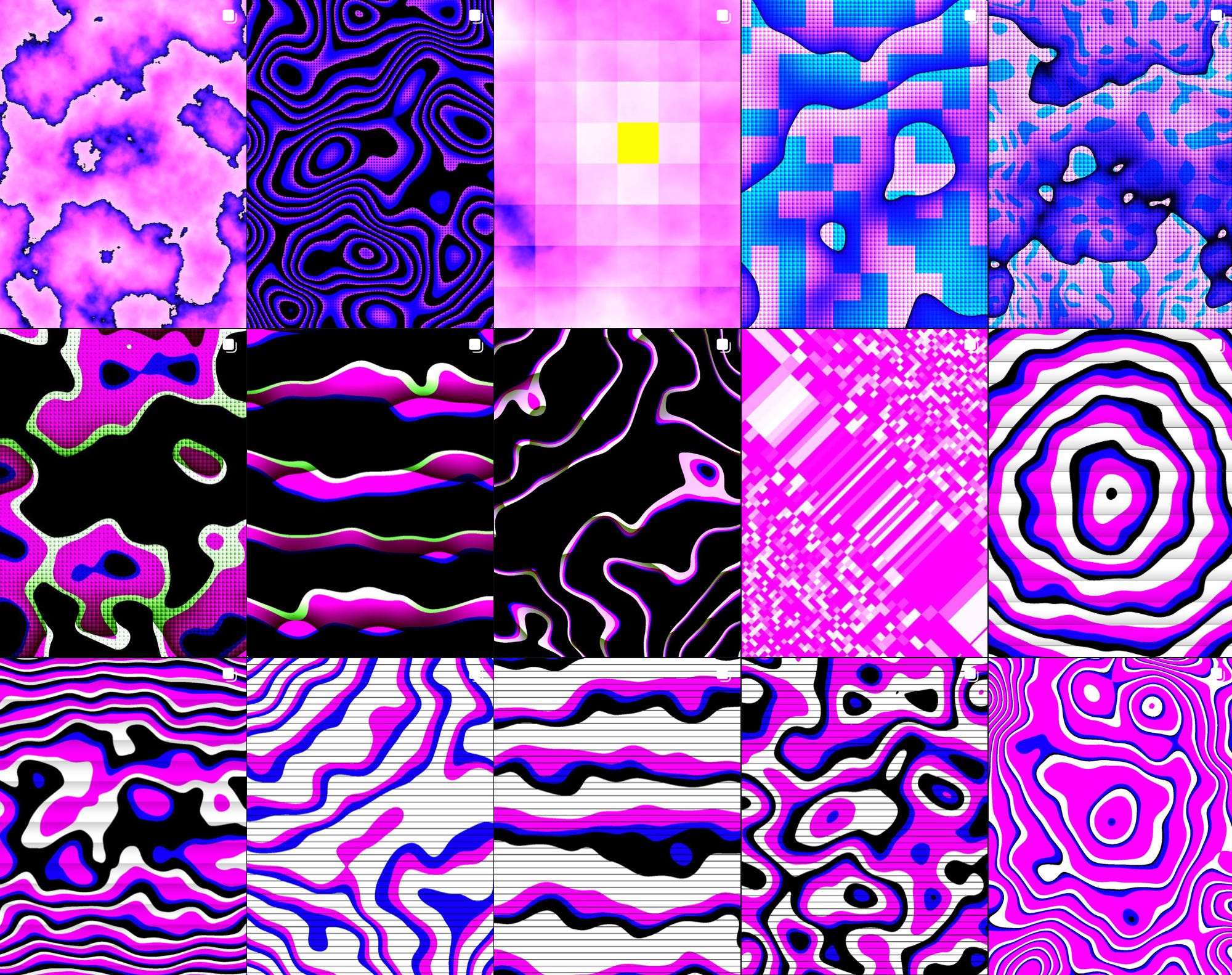
When you have unlimited access to something, the harder or longer the decision-making process becomes, thus by limiting myself with a small color palette, I wouldn’t spend much time deciding on that during a shader creation and save some time during the exercise of building a frequent practice of creating.
Getting familiar
After 9 months, in 2021 I felt I had started to build my little shader practice and found myself creating a bit more often than the first year. That second year I made 139 shaders.
And since the flow of creating was kicking-in, I decided to slowly introduce more colors into my almost-daily practice. That year some days I wouldn’t limit myself to use mostly pink, but maybe getting away from pink completely, as long as it wouldn’t take so much of my time in terms of decision-making while creating a shader.
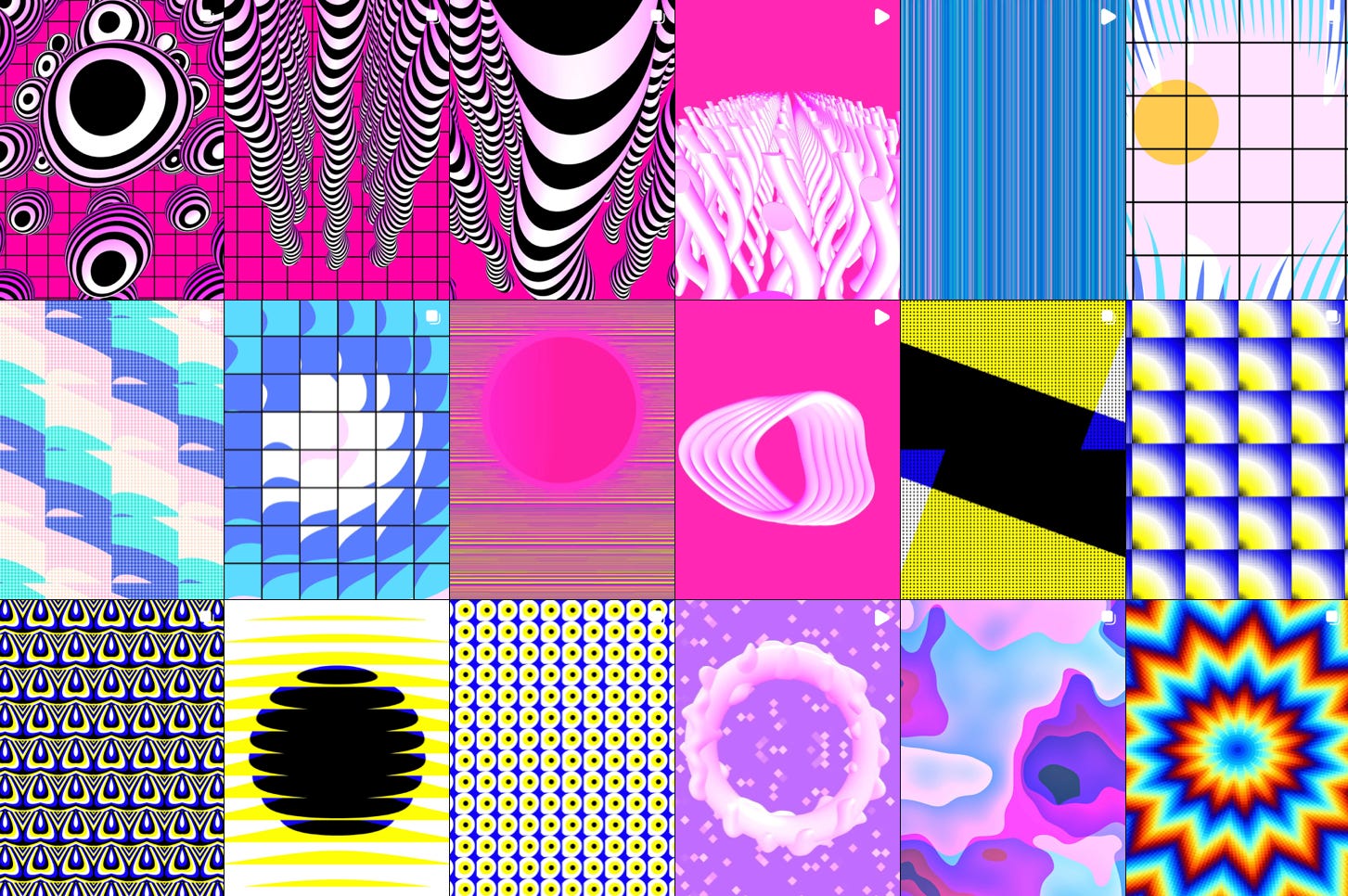
When it comes to algorithm exploration, in here I was learning ray marching to create 3D shapes with pure pixel manipulation within a fragment shader, while still exploring 2D abstract work, often but not always with noise algorithms, and understanding better domain repetition to create patterns.
Developing a style
By 2022 I managed making 296 shaders. I was getting faster! The practice of coding shaders was beginning to settle and I started to feel I was also finding my style as an artist.
The more I was creating, the more comfortable I was getting at sharing creations half-done or tenth-done, and the easier the ‘let go’ of a not-ready creation was. Furthermore, the more natural I was at being vulnerable in the digital canvas: creating shapes, choosing colors and movement didn’t feel anymore so much as a choice, but rather as a true expression of a feeling.
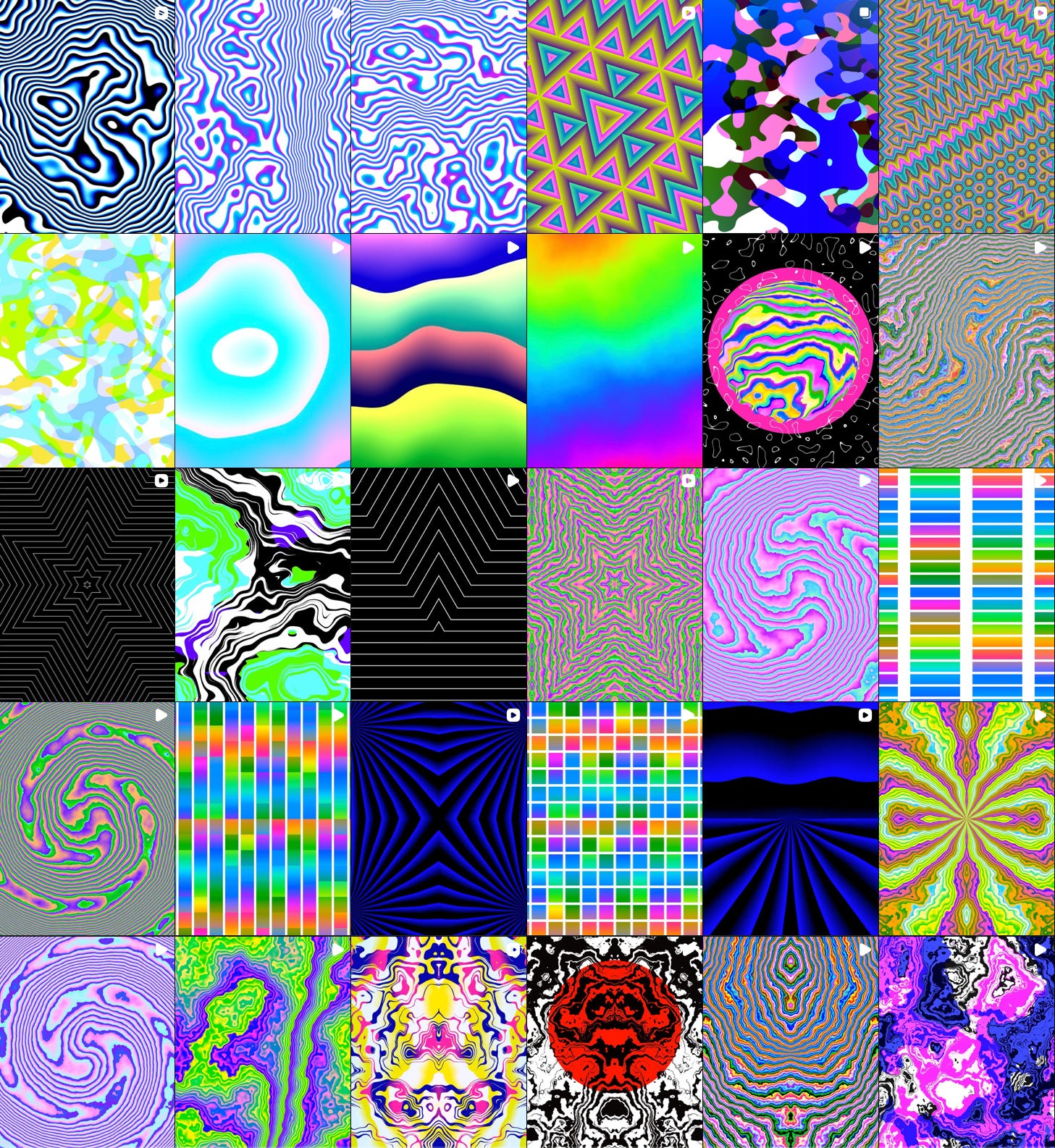
Since the beginning, drawing with code felt like art therapy. But given that I was still learning basic algorithms for programming in GLSL, often I couldn’t fully control what I was doing. Maybe what I had on my mind was not fully expressed yet in the canvas, just parts of it. But during this year, I felt I had started having more control on transferring my ideas into the canvas. I began writing my own noise algorithms and sharing my gathered knowledge in shape of workshops.
I also discovered that at this point I was slowly creating a library of techniques and visual work that allowed me to pick and pull from my favorite threads here and there in order to create something that wasn’t fully from scratch, which tends to take longer, but rather iterate further from some seeded ideas, and mix and match them.
If I was down and sad, I’d tend to use dark colors and dark shape themes. If I was angry or stress, I’d use loud dark colors with shapes in tension. And if I was happy, thrill or peaceful I’d use pastel, bright or soft colors, with a gentler, friendlier or energetic look. Always generating an artwork that felt hypnotic, bringing me peace either way as an emotional releaser.
Refining a style
In 2023 I made 241 shaders. Not as many as the previous year, but still enough to continue building my almost-daily practice.
I was proud of sticking together with this artistic practice, which had let me to reach my goals. By then, it was a habit that if I went many days without making a shader, I’d miss it and felt I needed my happy place: mindfulness therapy and creative space.
I also was glad that I wouldn’t force myself to do a shader daily all year long if I didn’t feel like it. I had no intention of making an artistic practice that would feel like a tedious job (even when I wanted it to become my main job, but not a burnout kind of job) or forced habit, rather than a natural one that felt good by exercising it. Just as when you go workout your favorite sport weekly or yoga class, that you enjoy so much you decide to make it your job and work as a trainer/instructor.
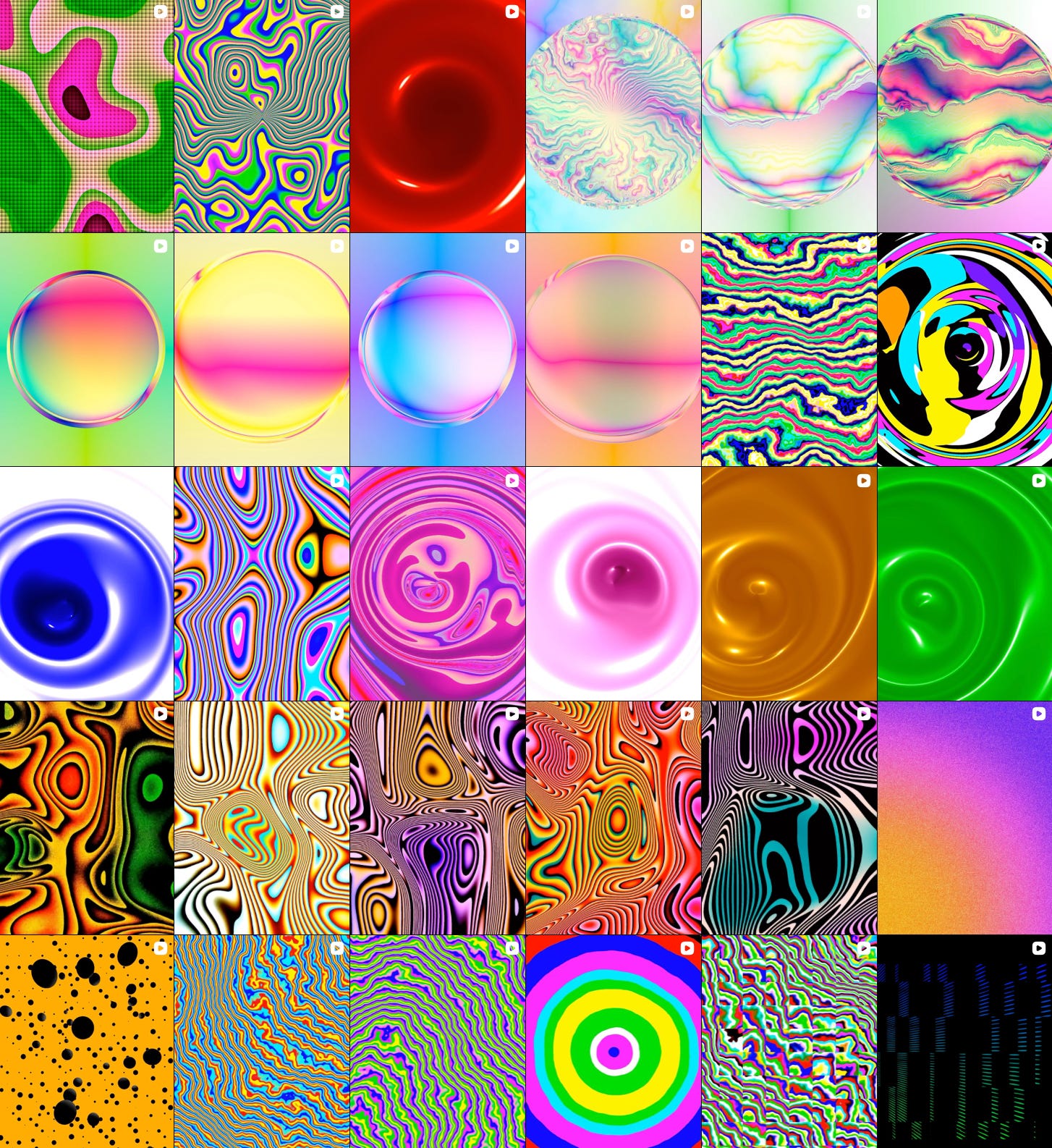
As I was deepening my artistic style by drawing with shaders, I found myself exploring new algorithms this year such as light refraction with ray marching, light in 2D visuals that make them look as 3D (yes, basically faking ray marching), and extending on my own noise algorithms to sometimes avoid using very long (code length) open sourced ones. I was trying to improve the performance of my shaders code-wise, hence trying to write as little code as I could to create something, because in addition to care about this attribute as a programmer, I have an old computer that every time I’d make something with ray marching, its fans were heating so much I felt my computer could explode at any moment.
It was the beginning of pushing the boundaries of my algorithm knowledge at the time to the next level. This year I started this newsletter, to continue on a path of sharing gathered knowledge, as I finally felt I could explain what I was learning even better than the previous year, and wanted to make the journey into learning shaders with GLSL faster and easier for others than it was for me when I got started. I thought many learning resources for GLSL are quite complex to begin with and intimidating if one doesn’t have a computer science, engineering or math degree. I wanted to make it more accessible for people like me.
Steady practice
Another year went by, and in 2024 I had a prosper ongoing almost-daily creative coding practice that was bringing me the kind of work I wish to do as an artist. I created 221 shaders, less than the previous year, but who’s counting within a time frame. For me it’s all about my own pace and flow. It’s not a race.
I had started collaborating with two museums in two different countries to showcase some of my work in an interactive format as a collaborative performance with a musician and a physical installation reacting to body tracking.
The mindfulness the practice of making my art was giving me was reflecting stronger in my artwork. I intentionally shaped and layered moving forms with a variety of color palettes directed always by my emotions. I still followed a pomodoro method in which I’d pursue to research an algorithm or shader technique for some days or a week while sometimes using the same color palette, iterating each time after where I left last more often than the former year.
Because I knew better what I was doing and sharing gathered knowledge is part of who I am, I decided to make a complete shader course on learning fundamentals when an opportunity arose on a new platform that invited me. A course designed for beginners eager to dive into the world of computational thinking and creative coding with shaders, as well as for those who weren’t necessarily beginners, but still struggled with a solid foundation.
This year I tried to sit with my craft no longer than 2 hours a day. Some days started to be enough just to do 30 minutes, others one hour, and whenever I’d find a rabbit hole, I’d tell myself after 2 hours it was time to wrap that up for the day, and continue another day digging such rabbit hole. I still needed to remind myself that having some boundaries allows you to not feel overwhelmed and staying consistent. I believe building some discipline, as my beloved martial arts, is an integral part of maintaining an artistic practice.
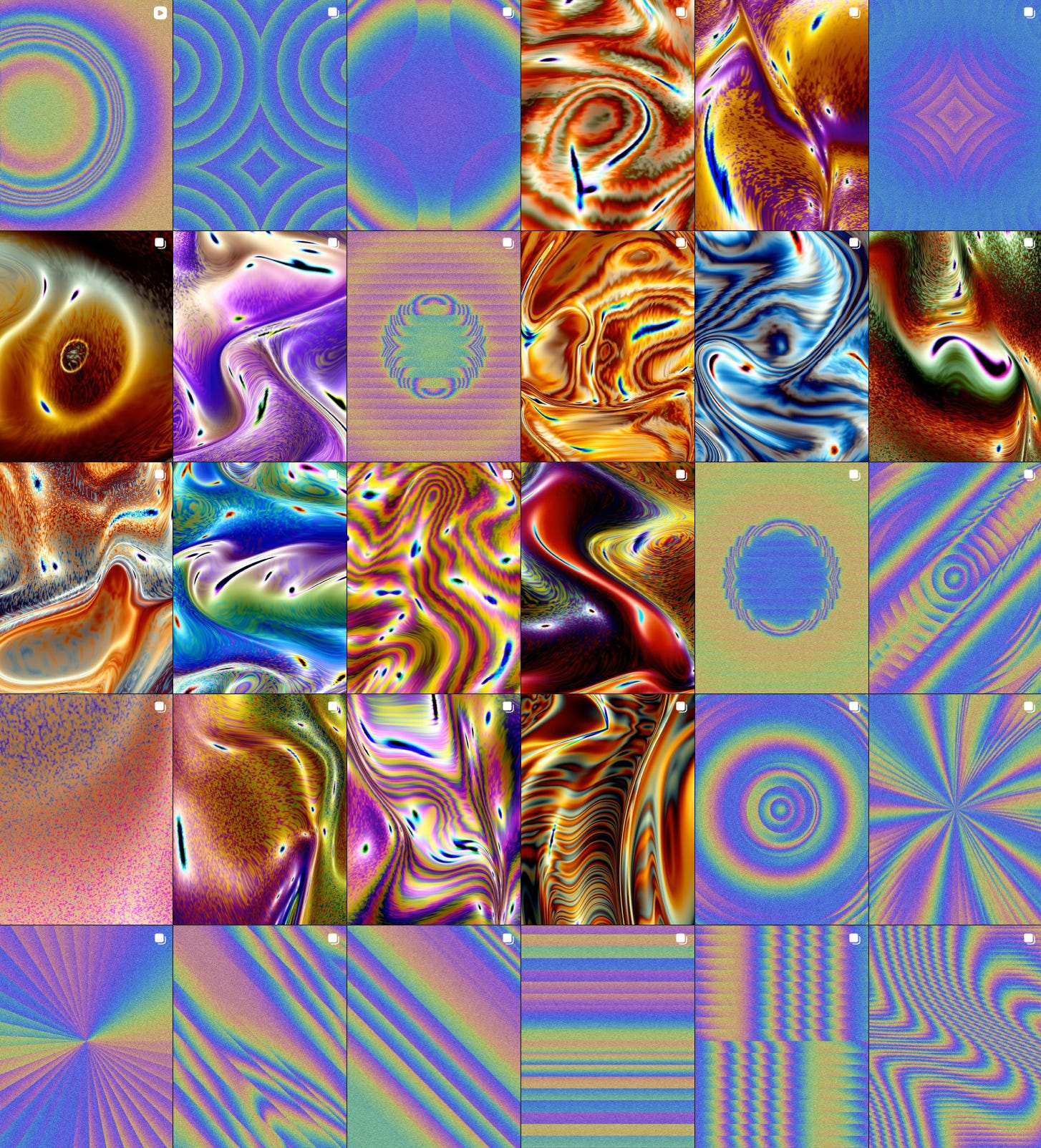
Visually, I explored themes of sanity along with consciousness states intending to provoke hypnotic sensations, which are part of my daydreams when I’m in a meditative state revealing often to me as psychedelic visions (no drugs involved, my imagination travels far).
Algorithmically speaking, I was researching and exploring textures together with noise or patterns. 90s aesthetic with that imperfect look in printed photographs or pixelated VHS videos with grain texture. Silky, shiny liquified soft textures like those from a marine or feathered animal.
Effortless practice
The time had arrived where my almost-daily practice felt like walking or riding a bike. The year of 2025 I made 275 shaders.
My library of techniques and visual work was growing, and with it a convinience of going from one theme to another one in short time. Because my brain was getting used to threat math and algorithms as painter do with paint on a canvas, even if I was curious to explore a new coding technique, my brain would be faster at grasping or understanding the logic behind it, compared to how it was during the first two years of my practice.
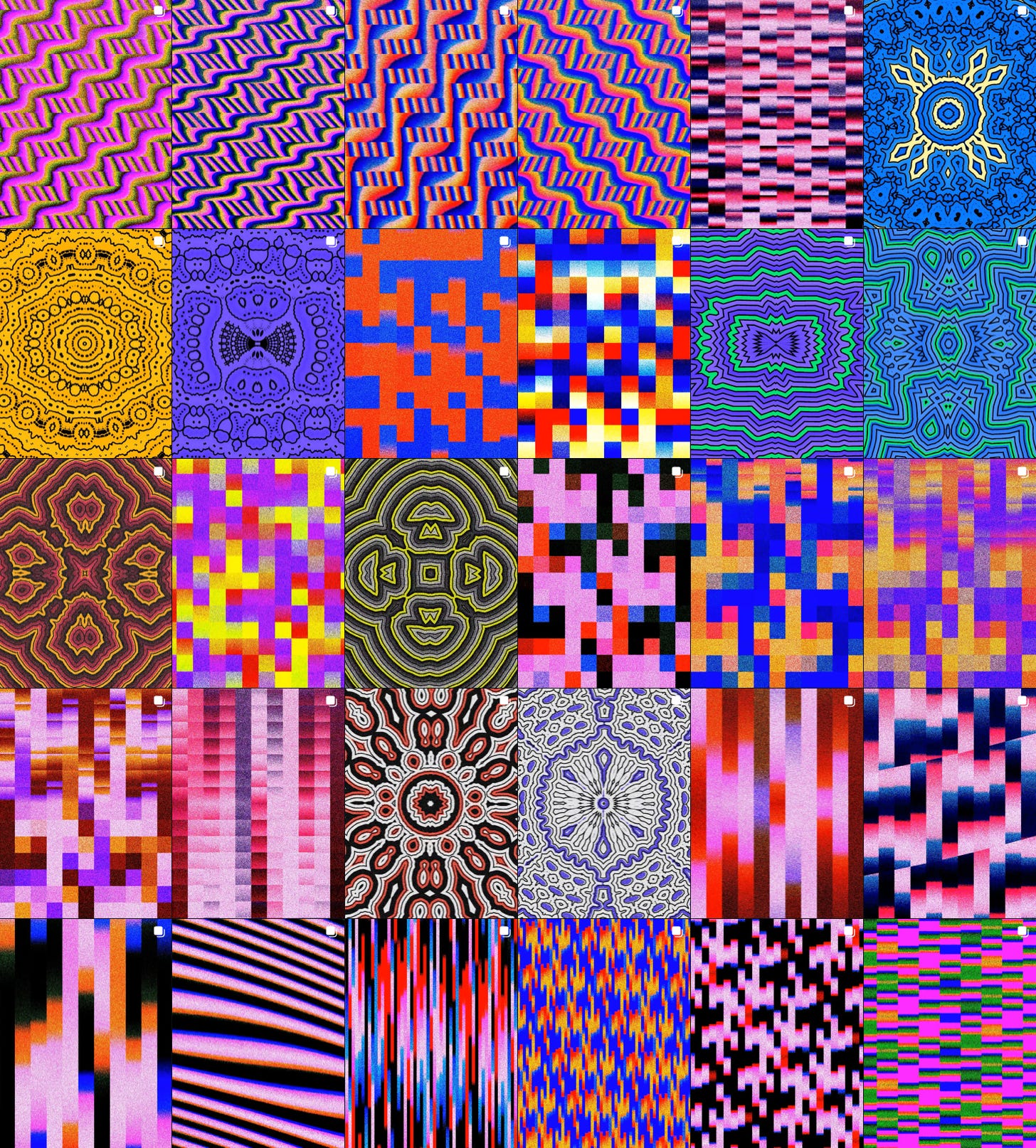
This year I was still strong on using grain textures with my dear noise and domain repetition to create patterns. I also began pushing the boundaries of fractal algorithms (I find them so fascinating and hypnotic, specially as we can find them in nature and organic forms within ecosystems), which I began exploring in former years but haven’t mentioned it as it was not showing up in the artwork shared from those years.
If I’d show you all of my #anydayshaders, I’d have to list way more techniques than the ones mentioned in this post, and I already feel like I’m writing a novel. I have no intention to bore you, but to inspire you.
Current practice
We are in July of 2026, midyear, and to this day I’ve made 173 shaders. Let’s see how many more life allows me to create the rest of the year with my motto of ‘making with no pressure’.
At the present, I find myself still creating art almost-daily, and can’t or won’t do it daily. I refuse to put that kind of pressure to myself, which until today had worked out well for me, as I was able to tackle my first artistic goals and much more I couldn’t possibly imagine at the time.
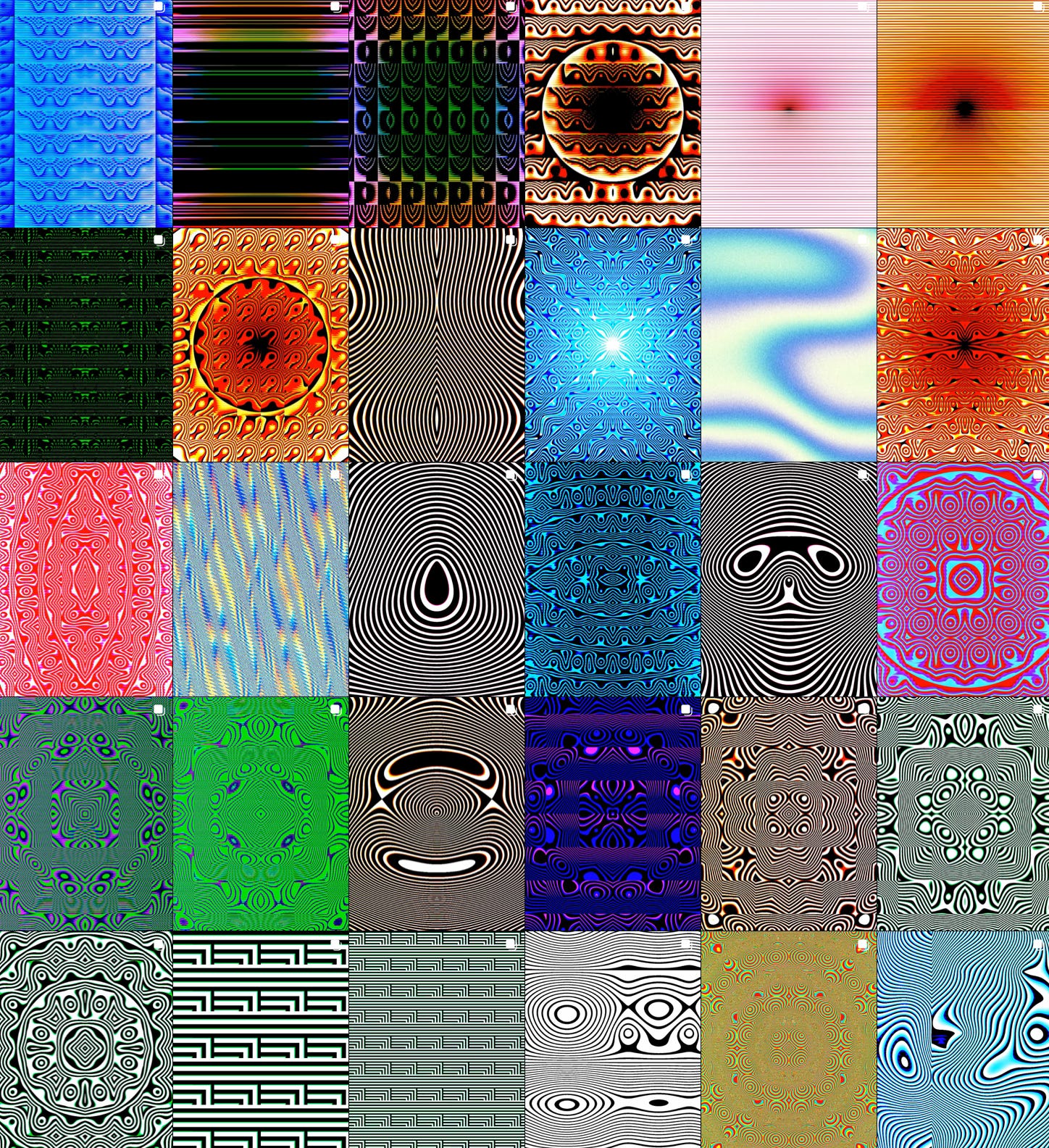
Right now I find myself still loving the use of noise and grain textures in my visual work. I’m exploring new territories leveling-up with my own noise algorithms mixed with domain repetition to draw optical illusions abstractly of organic forms and elements of nature such as fire, rain, light, plants, flowers, animals, stone or wood textures. The 90s 3D hidden artwork from the books Magic Eye are big inspiration.
Everything I draw with code is inspired by life experiences (lots of nostalgia), sound, surrealism, and the abstract. Maybe something important to mention from my almost-daily practice from day one is that it’s heavily influenced by music (hence one of my first goals). When I sit to write shaders and paint in the digital canvas, I listen to music 90% of the time. It’s part of my mindfulness process within my practice.
First I feel my emotions, I listen to my body, and I play a tune that feels good with that. Then I start knitting with code whether is a new algorithm exploration, or algorithms I already know to express what I am sensing.
Some days I have a vision of what I want to draw, others I don’t and I simply put together some math until I land in something visually captivating that I want to record. Other days are none of that and it’s a bug (code error) I bumped into, but when I see it it’s just beautiful, I keep the sketch even if it has a programming error. That is the beauty of making generative art or art with code: you don’t need to care that the code is well written. You can have misspellings and grammatical errors as when you’re learning a new language, and it’s totally fine! What matters is the output since you’re making art, not software.
This is the first year that I’m trying to add a new boundary: having a schedule. I create in the mornings as soon as I wake up. I make coffee, read a bit on my phone, and then start drawing with shaders. If some mornings I’m not in the mood, or maybe have no time because of life appointments, I do it in the evenings after dinner or working out.
Btw. if you’re ever curious and go count my shaders on social media, you won’t find all of them. I tend to delete the ones I feel are terrible after sharing them. I do keep them in my computer on my shader digital diary, but not every one of them ends up being shared with the world. I thought of also talking about this bit, because it is hard and frustrating some days to make something that one doesn’t find good enough. I still force myself to share it as part of my process, but I allow myself to delete it from the public sphere, if it disturbs me too much.
This year as I feel I begin to master my practice, I had an entrepreneurial spark. For the longest time, I’ve been inspired by analog art. I set out to launch an online shop with limited editions of fine art prints. This topic made it into its own post you can read here. If you want to support me, you can collect from a selection of my generative artworks produced as museum-quality archival giclée prints. I made four collections of 50 unique editions, and will be only available until the end of 2026. After this I no longer will print these editions ever again.
Following that, I moved the shader course I initially created two years ago into my own platform. It’s not a platform created by me, but rather a platform I subscribed to for hosting courses. This way I have full control over it and can expand the course, which was the plan to begin with, but when you work through a third-party, every step takes a long time to happen. This subject also has its own post. Now I’m adding content almost daily, as the goal is to improve the quality of its content and increase the number of accessible learning resources, giving others the confidence and inspiration to write their own shaders.
Tips on an almost-daily practice
Wow, if you made it so far until here, thanks for reading this. I hope you find my detailed journey of building my practice of writing shaders to make art useful. If you think this might be valuable for someone else, please share it with them.
If you’re having a hard time on creating a practice in computational art with creative coding, keep in mind:
Repetition builds mastery
Progress comes through practice
Take a day at a time
Sit to create only if you feel inspired or want to learn something new
It’s ok to not be productive everyday of the year
Find your flow
What others share on socials does’t represent a standard to measure yourself
Put yourself first, everything else can follow
It’s not a competition or a race
A little discipline provides consistency
Setting boundaries help maintain focus
Make a schedule for it, only if fitting
Share to the world as much as you feel comfortable with sharing
In regards the last tip: I won’t deny sharing in social media helps a lot in having other people discover your work, including future collaborators, curators, and even foster friendships with fellow artists. But this is about mastering your craft, and I believe is overrated that everyone must be in social media sharing their practice progress. I know many people who are by nature stress by accessing social media, so don’t let that fact stop you from building a practice. There are other ways for you to share your practice with the world if you want to, like making a blog. Maybe it’s about finding the right social media network that works for you, without adding any stress to your life. Maybe is about not sharing every iteration of your practice, but rather monthly, quarterly or yearly milestones.
Online workshop on building a practice
I’ve been thinking of making an online workshop for helping others to build a practice of making computational art with creative coding.
I picture a month-long workshop with 4 sessions (maybe using zoom and discord) for a cohort of maximum 15 people. The workshop would be for example, every Tuesday for 4 weeks, with each session lasting 2-3 hours (including ofc some breaks).
The workshop’s purpose would be to get you started with your practice, whether you choose it to be daily or not, which will not be the goal here, but rather to give you the tools needed to make it a habit. Most likely after a month, you’ll be getting used to find a process and schedule that works for you, so that after that it might be easier for you to continue on a steady path towards building your practice.
You don’t need to make a shader practice the focus for this workshop. It could be p5.js, processing, TouchDesigner or Unity. Basically the way of creating wouldn’t be important either. I’m not going to teach you shaders. I will teach you how to lay the foundation for mastering your craft.
If this sounds interesting to you, please leave me a comment here or reach out to me through any of my websites or social media channels listed in the footer. If at least 12 people show interest, I’d make this workshop happen and announce it for you to join.
Until next time,
✌🏽
Thanks for reading! 🙂🌈🪷
Subscribe if you’re reading this on the web, and prefer to receive these posts in your mailbox.
ilithya.rocks
courses.ilithya.rocks
shop.ilithya.rocks
Follow me:
instagram // bluesky // threads // twitter